Water hammer in hydraulic systems: how to diagnose it correctly.
Let us begin with the simplest definition: Water hammer is a temporary phenomenon that occurs in a pipeline when the velocity of a fluid changes rapidly, generating a pressure wave that propagates along the pipe.
From a more technical perspective, it would be possible to analyze from a physical standpoint how these pressure peaks are characterized and how they can be estimated based on the density of the fluid, its pressure and velocity variation, as well as the propagation speed of the wave. However, two aspects are more important from a practical point of view. The first is to clearly understand that this phenomenon, which mainly affects the points of discontinuity in the pipeline, is destined over time to compromise the safety and durability of the systems. The second is that, as always, treatment requires diagnosis first and therefore water hammer must be correctly identified in order to implement the right strategies to prevent it.
The signals of water hammer: a matter of hearing.
How can water hammer be recognized? Keep in mind that water hammer does not always manifest itself with immediately evident effects, but in most cases it leaves some characteristic signals that allow an installer or maintenance technician to recognize its presence.
Moreover, since it is a transient phenomenon related to a sudden change in fluid velocity, its manifestations are often brief but intense.
It is called water hammer because the most typical signal is a sharp noise coming from the pipes, a sort of thud or metallic knock. The noise of water hammer is nothing more than the acoustic effect of the pressure waves generated by the sudden deceleration of the fluid and the resulting deformation of the water column inside the pipeline. The temporary compression of the fluid translates into rapid pressure variations which in turn cause micro-movements in the pipe walls and in the components of the system. All of this appears externally as a thud, a metallic knock, a succession of knocks or pipe vibrations.
After the noise… material damage.
Acoustic signals should never be ignored because water hammer can generate cyclic mechanical stresses over time that accelerate the wear of pipes and devices installed in the system.
If noise is the first symptom that should alert us, when other signs appear it means the problem is already critical. Repeated vibrations can in fact cause loosening of fittings and deterioration of seals, increasing the risk of leaks and failures. In addition, the mechanical components of the system may also be subjected to dangerous stresses and suffer serious damage.
How to correctly diagnose water hammer.
To properly frame the problem, observing the noise may not be sufficient and should be integrated with instrumental checks. A correct diagnosis should always combine observation of symptoms, analysis of operating conditions and monitoring of pressure in the circuit. If significant pressure oscillations are recorded on measuring instruments, we can say with certainty that we are facing the phenomenon.
In more complex systems, especially in industrial environments or distribution networks, vibration sensors or pressure recorders are used. However, in most cases even the pressure gauge is very useful. Although it does not always allow the fastest peaks to be detected, it is able to highlight abnormal pressure oscillations during certain operating phases such as pump start-up or shutdown.
Anti water hammer devices: the most common solutions.
Once it has been established that the system presents these harmful overpressure peaks, several solutions can be adopted.
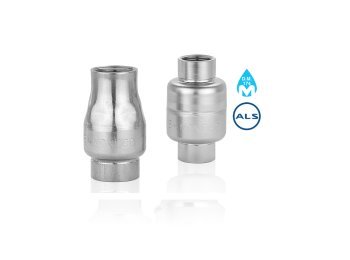
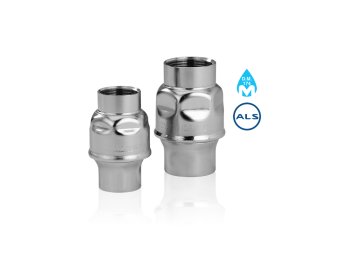
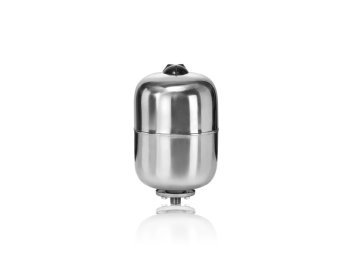
Check valves are among the most common. Since they allow fluid to pass in only one direction, in the event of reverse flow the valves close and protect pumps and other delicate mechanical components of the system. A typical location is downstream of the pump on the discharge pipeline. Another solution is represented by pressure switches, which keep circuit pressure within controlled values, and expansion vessels. The latter are real anti water hammer tanks that function as “buffers”. These are metal containers divided into two chambers: one connected to the hydraulic circuit and filled with the system fluid, the other containing air or pressurized gas. The two chambers are separated by an elastic membrane. When a sudden increase in pressure occurs in the circuit, the fluid enters the tank and compresses the air chamber, which acts as a hydraulic shock absorber. Air, being compressible, allows part of the energy of the pressure wave to be absorbed, limiting the effects of water hammer on the network.
FAQ - Water hammer
What is water hammer in a hydraulic system?
Water hammer is a transient phenomenon that occurs when the velocity of a fluid suddenly changes inside a pipe. This variation generates a pressure wave that propagates along the pipeline and can cause noise, vibrations and stress on system components.
How to recognize water hammer in pipes?
The most typical signal is a sharp noise or thud coming from the pipes, often accompanied by pipeline vibrations. The phenomenon generally occurs during the closing of a valve or the stopping of a pump.
How can water hammer be diagnosed?
Diagnosis is based on observation of symptoms and monitoring of pressure in the circuit. Instruments such as pressure gauges, pressure recorders or vibration sensors allow abnormal pressure oscillations to be detected.
Can water hammer damage the hydraulic system?
Yes. Over time, the pressure peaks generated by water hammer can cause wear of pipes, loosening of fittings, deterioration of seals and damage to pumps and valves.
How can water hammer be prevented?
To reduce the risk of water hammer, several devices can be installed. Water Fitters offers a wide range of check valves, pressure switches and expansion vessels capable of ensuring maximum reliability and safety.