Drinking water valves: how to navigate requirements and certifications.
Drinking water is the most precious resource managed by our water infrastructure.
From an organoleptic standpoint it must be clear , odourless , colourless and transparent ; however, it is above all at the microscopic level that maximum purity must be guaranteed. Chemical substances and micro-organisms must remain strictly within defined limits for water to be considered safe and fit for human consumption.
Preserving these characteristics along the entire journey — from the abstraction point through the supply networks, right to the end user's tap — is a complex process that requires the integration of engineering, regulatory rigour and materials technology. The water stress associated with climate change and the growing focus on public health protection make safeguarding this essential resource even more urgent.

In this context, the choice of hydraulic components also plays a decisive role. Every element in contact with the fluid must guarantee the absence of pollutant leaching, prevent bacterial proliferation and resist corrosion over time. For designers, installers and network operators, understanding the regulatory framework and being able to rely on advanced technological solutions is essential to ensure the highest reliability and safety of drinking water.
Valves intended for use with drinking water: the regulatory framework.
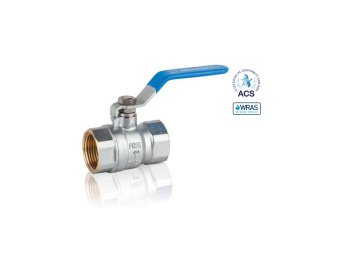
Water abstraction and distribution systems use various types of valves: ball valves for shut-off, check valves to prevent contamination and backflow, butterfly or gate valves for supply. In the waterworks sector, when selecting a valve it is not enough to assess the operating pressure or nominal diameter: it must be ensured that the component in contact with the water does not alter its properties or release harmful substances into the network.
In Italy, the suitability of materials and components intended for contact with drinking water is governed by D.M. 174/2004. The decree is built on two fundamental pillars. The first is the positive lists of materials, which define the chemical substances and metal alloys authorised for the manufacture of components. The second is migration limits, which require laboratory testing to verify that a valve does not release into the water organic substances or heavy metals — such as lead, nickel, chromium or cadmium — beyond the legally established thresholds.
D.Lgs. 18/2023 transposes the European Drinking Water Directive (EU 2020/2184), known as the DWD. Its approach is based on a risk assessment of the entire water chain, from source to point of delivery. For hydraulic components, the limits on lead leaching are particularly stringent, together with the prohibition on the release of per- and polyfluoroalkyl substances (PFAS), bisphenol A and chlorates, extending controls to gaskets and sealing rings as well.
The regulatory framework thus sets the legal obligations and limit parameters — but how can one guarantee that a valve or component is genuinely compatible with drinking water? The key instrument is the Declaration of Conformity: with this document, the manufacturer attests on its own responsibility that the materials used appear on the positive lists and that the chemical migration tests, conducted at accredited laboratories, have given a positive result.
The role of certifications.
Unlike the Declaration of Conformity, which is a legal obligation, certifications are a voluntary attestation. Through independent audits, laboratory tests and periodic checks, they transparently guarantee the quality of materials and processes. In short: if regulation sets the minimum safety limits required by law, certification is the documentary and technical proof that demonstrates a product's compliance with a specific standard. The starting point is the legal standard, but additional requirements and tests may be added.
Certifications offer multiple advantages: on one hand they reinforce and complement compliance with regulations alongside the Declaration of Conformity; on the other, they allow manufacturers and distributors to market their components on international markets as well. The main certifications referenced for drinking water valves are:
- ACS (Attestation de Conformité Sanitaire) — France
- DVGW — Germany, issued by the German Association for Gas and Water ( Deutscher Verein des Gas- und Wasserfaches)
- WRAS (Water Regulations Advisory Scheme) — United Kingdom
- NSF / ANSI 61 — managed by the independent American organisation NSF International
Towards increasingly stringent standards.
The management of drinking water is moving towards ever greater attention to public health protection and material quality. The DWD imposes very strict requirements, with key compliance deadlines set for the coming years starting from the end of 2026. Choosing products already compliant with the most rigorous certifications means anticipating the directives and ensuring excellent long-term safety and reliability for installations.
The added value of electropolished stainless steel.
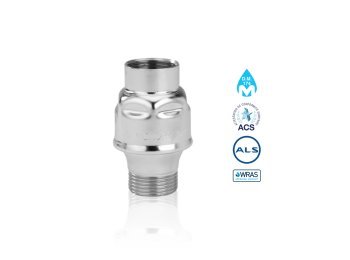
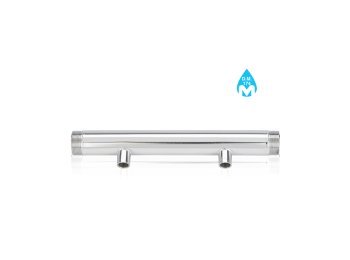
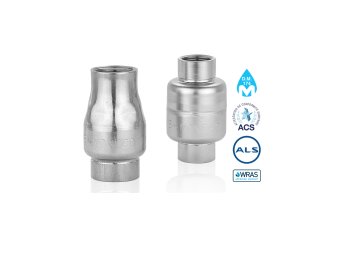
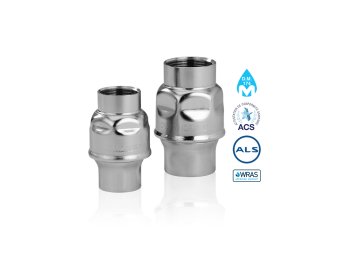
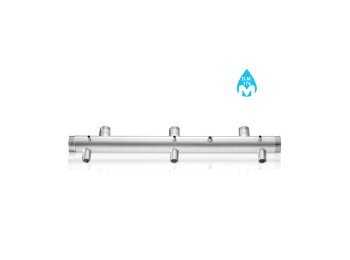
Waterfitters positions itself as a reference point for sector professionals, supplying valves and other components with various certifications for use with drinking water. In particular, the range is characterised by a wide selection of electropolished stainless steel valves.
AISI 304 and AISI 316 stainless steel is the premier material for high-quality hydraulics, thanks to its extraordinary mechanical strength, durability and natural chemical inertness in contact with the fluid. This makes it an ideal choice for the waterworks sector. The electropolishing treatment further enhances the material's qualities: the electrochemical process microscopically removes surface roughness from the steel, bringing the finish to levels of absolute homogeneity. It also promotes the formation of a deeper, more uniform passivation layer (chromium oxide) that minimises the risk of pitting corrosion and eliminates the release of heavy metals into the supplied water. The perfectly smooth surface prevents bacterial settlement, limits limescale deposits and makes cleaning operations extremely fast and effective.
Frequently asked questions about drinking water valves.
What regulations govern valves and hydraulic components in contact with drinking water in Italy?
In Italy the main regulatory reference is D.M. 174/2004, which governs the suitability of materials and components intended for contact with drinking water. The decree establishes the positive lists of permitted materials and the chemical migration limits, requiring manufacturers to demonstrate — through accredited laboratory tests — that valves and other components do not release organic substances or heavy metals into the water beyond permitted thresholds. Added to this is D.Lgs. 18/2023, which transposes the European Drinking Water Directive (DWD 2020/2184) and further tightens requirements: it introduces much stricter limits on lead leaching and explicitly prohibits the release of PFAS, bisphenol A and chlorates, extending checks to gaskets and sealing rings. For those who design, install or manage water systems, navigating this regulatory framework is essential to ensure installation compliance and the safety of the water supplied.
What is the difference between a Declaration of Conformity and a certification for drinking water?
The Declaration of Conformity is a legal obligation: with this document the manufacturer attests on its own responsibility that the component has been made with materials on the positive lists of D.M. 174/2004 and that the chemical migration tests have given a positive result. It is the minimum mandatory requirement for marketing a product intended for contact with drinking water in Italy. Certification, on the other hand, is voluntary and goes beyond simple legal compliance: it involves independent audits conducted by accredited third-party bodies, additional laboratory tests and periodic audits of the quality of the production process. The main reference certifications for the European and international market are ACS (France), DVGW (Germany), WRAS (United Kingdom) and NSF/ANSI 61 (USA). Choosing certified components means not only complying with the regulation but also having transparent, verified documentary proof of product quality, which is also valid on international markets.
Why is electropolished stainless steel preferable to other materials for valves in contact with drinking water?
AISI 304 and AISI 316 stainless steel is already an excellent material for water applications, thanks to its mechanical strength, durability and chemical inertness that prevents the release of substances into the water. The electropolishing treatment significantly enhances these characteristics. The electrochemical process eliminates surface imperfections at a microscopic level, reducing roughness to very low values and making the surface perfectly homogeneous. This has three direct effects: firstly, it promotes the formation of a passivation layer — chromium oxide — that is deeper and more uniform, drastically reducing the risk of pitting corrosion even with aggressive water; secondly, it virtually eliminates the release of heavy metals into the supplied water; thirdly, the smooth surface physically prevents bacterial adhesion and proliferation and limits limescale deposits, simplifying maintenance and extending the component's service life.
What does it mean that a valve complies with the European Drinking Water Directive (DWD 2020/2184)?
The European Drinking Water Directive (EU 2020/2184), transposed in Italy by D.Lgs. 18/2023, introduced a risk-assessment approach covering the entire water chain — from source to end user's tap — and set requirements significantly more stringent than the previous legislation. For hydraulic components, the most critical aspects concern lead leaching limits, which have been substantially lowered, and the explicit prohibition of substances such as PFAS, bisphenol A and chlorates. Compliance with the DWD is therefore not assessed only on the finished product, but requires that the entire production chain — from base materials to gaskets — meets the new parameters. With compliance deadlines starting from 2026, choosing valves and components already compliant with DWD requirements today means protecting the installation from future mandatory updates and guaranteeing maximum water safety for end users.
How do you choose the right valve for a drinking water distribution system?
Choosing the right valve for a drinking water system depends on a combination of technical and regulatory factors. On the technical side, the type of application must be considered — shut-off (ball valve), flow regulation (butterfly or gate valve), backflow prevention (check valve) — along with the operating pressure, nominal diameter, water temperature and chemical characteristics of the fluid (hardness, pH, chlorine content). On the regulatory side, it is essential that the component is accompanied by a Declaration of Conformity to D.M. 174/2004 and, for newly designed or refurbished systems, that it already meets the requirements of D.Lgs. 18/2023. The presence of additional certifications — ACS, DVGW, WRAS or NSF/ANSI 61 — is a further indicator of quality and compliance with international standards. Waterfitters offers a curated range of certified drinking water valves, with particular focus on electropolished stainless steel solutions for the most demanding applications.