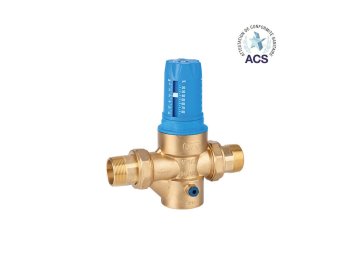
Pressure reducers: complete guide to selection, installation and maintenance in plumbing systems.
How to choose, install and correctly use pressure reducers in plumbing systems. A practical guide for installers and industry professionals to improve system efficiency, safety and service life, avoiding overpressure and recurring problems.
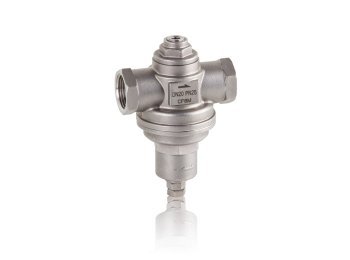
A pressure reducer is one of the most important, yet often underestimated, components in a plumbing system. Its main function is simple but essential: to reduce and stabilize the incoming water pressure, keeping it constant downstream regardless of variations in the supply network.
In many contexts — residential, industrial or food & beverage — mains water pressure can be unstable or excessive. Without proper control, this causes continuous stress on pipes, valves, fittings and equipment. The pressure reducer acts as a protection and regulation component, ensuring that the system always works under optimal conditions.
For installers and companies in the plumbing sector, it is important to consider that a pressure reducer is not just an accessory, but a strategic component of the system. Uncontrolled pressure does not necessarily cause immediate failure, but it accelerates wear and reduces the overall service life of the system. For this reason, in correctly designed systems, the pressure reducer is always included as a basic element for system management.
For installers and companies in the plumbing sector, it is important to consider that a pressure reducer is not just an accessory, but a strategic component of the system. Uncontrolled pressure does not necessarily cause immediate failure, but it accelerates wear and reduces the overall service life of the system. For this reason, in correctly designed systems, the pressure reducer is always included as a basic element for system management.

Features, materials and types: how to choose the correct pressure reducer
Choosing a pressure reducer depends on several technical factors: inlet pressure, desired downstream pressure, flow rate, type of fluid and application context. There is no “universal” pressure reducer, but rather a range of solutions that must be selected according to the real operating conditions. From a construction point of view, materials play a key role. Brass pressure reducers are widely used in standard plumbing systems due to their reliability and corrosion resistance. In more demanding contexts — such as aggressive environments, industrial systems or food applications — materials such as AISI 316 stainless steel are preferred, as they provide greater chemical resistance, hygiene and long-term durability.
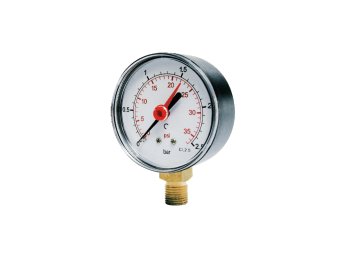
Another essential element is the regulation system. Pressure reducers can be manually adjustable or pre-set, and they often integrate filtration systems or pressure gauges for pressure control.
The presence of quality components, such as resistant membranes and precise sealing seats, directly affects regulation stability and device service life.
In the context of Waterfitters products, attention to material quality and construction precision is central: a well-designed pressure reducer not only regulates pressure, but does so consistently over time, reducing the need for maintenance.
The presence of quality components, such as resistant membranes and precise sealing seats, directly affects regulation stability and device service life.
In the context of Waterfitters products, attention to material quality and construction precision is central: a well-designed pressure reducer not only regulates pressure, but does so consistently over time, reducing the need for maintenance.
Where to install a pressure reducer and when it is really necessary
The position of the pressure reducer within the system is an aspect that is often underestimated but fundamental for correct operation. In general, the pressure reducer is installed upstream of the system, immediately after the water entry point, to protect the entire downstream network. However, in complex or industrial systems, it may be necessary to install multiple pressure reducers in specific points, for example to manage lines with different pressures or to protect sensitive equipment.
In these cases, the reducer becomes an integral part of system design and not a simple additional component.
In these cases, the reducer becomes an integral part of system design and not a simple additional component.
Its use is particularly recommended when mains pressure exceeds the recommended values for the installed components or when frequent pressure variations occur. Even in systems with pumps or pressure boosting units, the pressure reducer can help stabilize operation and reduce mechanical stress. Correct installation should always allow for inspection and maintenance: for this reason, it is good practice to include shut-off valves upstream and downstream, as well as pressure monitoring systems.
This allows quick interventions without compromising the operation of the entire system.
This allows quick interventions without compromising the operation of the entire system.
Benefits and problems avoided: why the pressure reducer makes the difference
Installing a pressure reducer brings both immediate and long-term benefits. The first is system protection: pipes, fittings and valves work within safe limits, reducing the risk of breakage and leaks. Another important advantage is reduced consumption. Excessive pressure leads to greater water use and increased system stress, while stabilized pressure improves the overall efficiency of the system.
From an operational point of view, the reducer helps eliminate unwanted phenomena such as water hammer, vibration and noise. If not managed, these phenomena can progressively damage the system and lead to frequent maintenance interventions.
Conversely, the absence of a reducer in a system subject to high pressure can cause significant problems: widespread leaks, equipment damage, reduced component service life and increased operating costs. For this reason, in carefully designed systems, the pressure reducer is not an option but a necessity.
Conversely, the absence of a reducer in a system subject to high pressure can cause significant problems: widespread leaks, equipment damage, reduced component service life and increased operating costs. For this reason, in carefully designed systems, the pressure reducer is not an option but a necessity.
FAQ – Pressure reducers
What is a pressure reducer used for?
It is used to reduce and keep water pressure constant downstream of the system, protecting pipes and components from overpressure and network fluctuations.
When is it necessary to install a pressure reducer?
When mains pressure is too high or unstable, or when sensitive components need to be protected and the service life of the system improved.
Where is a pressure reducer installed?
Generally at the system inlet, but in complex systems it can also be installed on specific lines to manage different pressure levels.
Which materials are best for a pressure reducer?
Brass for standard systems, AISI 316 stainless steel for aggressive environments or industrial and food applications.
Does a pressure reducer require maintenance?
Yes, periodic checks are recommended to verify calibration, membrane condition and the possible presence of impurities.