Water network digitalisation: the benefits of smart meters.
Water management is increasingly a matter of sustainability and innovation. Water utilities know this well, as they face a genuine shift in paradigm.
The need to monitor increasingly complex networks, detect anomalies promptly and address water losses with a structured approach has driven the adoption of advanced control functions and analysis methods. It is now clear that to protect water resources from the consequences of climate change and ageing infrastructure — according to the 2024 UN World Water Development Report, 25% of the world's population is exposed to water stress — a radical renewal plan is needed, one that relies above all on the digitalisation of networks. The goal is to move away from a predominantly reactive model and adopt a proactive approach instead, in which data enables prioritisation of interventions and more efficient use of available resources.
Artificial intelligence, connected sensors and smart water meters are the key players in this scenario, where the quality of decisions depends first and foremost on the quality of the information gathered in the field.
When the water network becomes a data network.
Losses are one of the main challenges in water resource management, with a national average exceeding 42%. The environmental and economic impact is significant: in addition to the waste of water abstracted that never reaches end users — even more serious in a context of growing climate change and drought — there is also the need to compensate with additional abstraction that requires further substantial energy consumption.
National and European policy is encouraging operators to modernise their meter stock, facilitating continuous monitoring and the reduction of waste. For utilities, adopting smart metering systems is therefore not merely a technological upgrade. It is part of a broader journey in which measurement, connectivity and data analysis become essential tools for planning investments, preventing critical failures and using water resources more consciously.
The starting point is recognising that a water distribution network is in itself a continuous source of information: flow rates, pressures, volumes delivered, consumption variations and operating conditions across different districts. However, to transform these physical phenomena into usable data, measurement instruments must be installed at strategic points in the network.
Why install smart meters: all the benefits of smart metering.
Compared to traditional reading, smart metering allows consumption data to be collected and transmitted automatically, reducing the need for physical access to the metering point. Depending on the infrastructure adopted, data can be acquired through mobile reading systems or sent periodically to a central platform via dedicated communication networks or IoT protocols.
The benefits go well beyond billing. A higher frequency of readings makes it possible to reconstruct consumption profiles with greater precision and to detect continuous or unusual consumption that would escape periodic manual reading. Comparing volumes injected into the network with those actually measured at end users becomes a systematic and automatic operation, capable of highlighting imbalances that would otherwise be invisible. Equally, it becomes easier to identify possible meter malfunctions, improve knowledge of individual water districts and provide users with more timely and detailed information on their consumption.
Smart meters thus become genuine information nodes distributed across the network. The more accurate, frequent and correctly contextualised the data, the greater the value it can assume in subsequent analysis phases.
How artificial intelligence identifies abnormal consumption and hidden leaks.
Artificial intelligence intervenes after measurement. Its task is to analyse large volumes of data and search for patterns that would be difficult to recognise through manual inspection.
Algorithms can learn the ordinary behaviour of a user or a given area of the network — the so-called water districts — taking into account factors such as time of day, day of the week, seasonality and consumption history. When the observed behaviour deviates significantly from the expected model, the system generates an alert. Constant consumption during night-time hours, a minimum flow rate that never returns to zero or a sudden increase not associated with known changes can, for example, indicate a leak or unforeseen usage. Similarly, a pressure drop accompanied by a flow variation can help to narrow down the area affected by a possible leak.
Artificial intelligence does not "see" the leak directly, but correlates signals from multiple points, assesses their consistency and assigns a priority to the detected anomalies. In this way it can support the planning of routine and extraordinary maintenance, directing checks and interventions towards areas where the probability of a problem is highest.
Data quality is central: the importance of a reliable technology partner.
Artificial intelligence systems need complete, continuous and reliable data. Measurement errors, missing transmissions, instruments that are insufficiently sensitive to low flow rates can distort the interpretation of network behaviour. This is why the digitalisation of water networks starts above all with choosing the right instrumentation. Meters, sensors and communication systems must be evaluated and selected based on the objectives and characteristics of the installation, so as to ensure precision and accuracy of measurements.
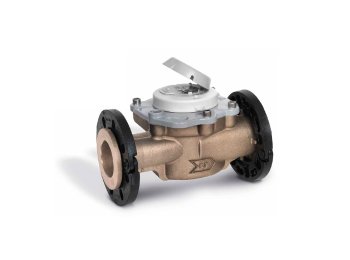
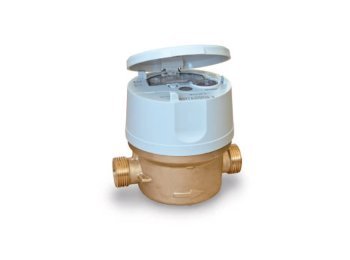
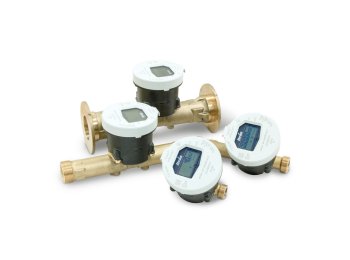
To meet the diverse needs of metering, remote reading and connectivity, Waterfitters offers a range of Itron water meters and sensors dedicated to residential, commercial, industrial and smart water metering applications. Relying on a qualified technology partner means being able to build a truly efficient integrated system, for the improvement of the end service and for the protection of water resources.
Discover the Itron range available on Water Fitters and explore the features, applications and technologies of smart meters and remote reading sensors: Itron joins Water Fitters.
FAQ - Itron network digitalisation and smart meters.
What is smart water metering and how does it work?
Smart water metering is a system for the automatic measurement of water consumption based on digital meters capable of collecting and transmitting reading data remotely, without the need for physical access to the metering point. Unlike traditional reading — carried out manually at periodic intervals, often monthly or bimonthly — a smart metering system can record consumption on an hourly basis or even more frequently and send it automatically to a centralised management platform. Various transmission technologies can be used: walk-by and drive-by systems, in which an operator or equipped vehicle collects data by passing close to the meters, or fixed IoT networks — such as LoRaWAN or wM-Bus — that allow continuous and autonomous transmission without any operational intervention. The result is a much more detailed and up-to-date view of actual network consumption, which becomes the basis for advanced analysis, anomaly detection and optimisation of water distribution.
Why are water losses so difficult to detect using traditional methods?
Losses in water networks are often hidden losses: they do not surface, do not cause immediate service interruptions and can remain active for months or years before being detected. With traditional methods, detection depends primarily on visual field checks, manual comparison of volumes injected and volumes billed, or user reports. These are reactive approaches that, by definition, intervene when the problem has already been present for some time. Smart meters, on the other hand, automatically detect early signs of leakage: a minimum night-time consumption that never reaches zero, an abnormal flow variation in a district, a persistent discrepancy between network input and output — all indicators that a smart metering system, combined with analytical algorithms, can identify long before the loss becomes visible or causes significant damage. This proactive approach reduces response times, limits waste and lowers the operational costs of network management.
What role does artificial intelligence play in the management of smart water networks?
Artificial intelligence does not replace measurement: it enhances it. Its contribution comes in the phase following data collection, when it is a matter of extracting useful information from large volumes of measurements coming from hundreds or thousands of points distributed across the network. Machine learning algorithms learn the habitual consumption patterns of each water district — taking into account variables such as time of day, day of the week, seasons and multi-year history — and are able to automatically flag any significant deviation from these patterns. This allows hidden leaks, fraudulent consumption, meter malfunctions or network pressure anomalies to be identified at a speed and precision impossible to achieve through manual analysis. AI also assigns a priority to detected anomalies, directing maintenance teams towards the most critical areas and making intervention planning far more efficient. In essence, it transforms raw network data into concrete operational decisions.
How much does meter quality affect the results of a smart metering system?
Decisively. A smart metering system is only as effective as the data it receives. If the meter is not sensitive to low flow rates — as is often the case with older mechanical instruments — minor losses go undetected, transmissions are incomplete and the analytical algorithms work on an insufficient data base, producing unreliable results. The choice of instrumentation is therefore the first and fundamental step of any water network digitalisation project. MID-certified meters with a wide measuring range (such as the R1000 class of Itron's Intelis wSource), combined with communication modules compatible with standard protocols (wM-Bus, LoRaWAN, OMSv4), ensure complete transmissions that are interoperable with the most widely used analysis platforms. Investing in quality instrumentation means making the entire data chain reliable, from field measurement through to the operational decision.
How does one practically start a smart water metering project on an existing network?
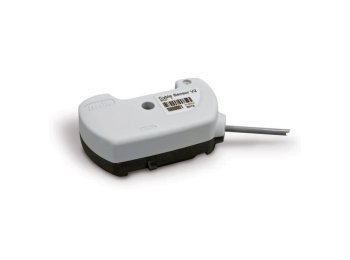
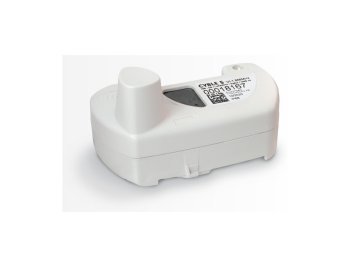
The starting point is an analysis of the existing network: extent, number of connections, type of meters installed, available communication infrastructure and the operator's priority objectives (loss reduction, billing optimisation, district monitoring, etc.). It is not necessary to replace all meters immediately: many modern systems — such as Itron's Cyble family — allow communication modules to be added to existing mechanical meters, starting automatic data collection without any hydraulic work. This modular approach allows the network to be digitalised progressively, following the operator's investment priorities. In a second phase, the most suitable communication infrastructure is chosen for the context (fixed IoT network, mobile reading or hybrid solution) and data collection is integrated with a management and analysis platform. Waterfitters is available to support the evaluation of the most suitable solutions, starting from the Itron range available in the catalogue.