Types of valves for hydraulic systems: functions, differences and selection criteria.
Have you ever wondered how many types of valves are in your home's hydraulic system? Probably not.
Yet, every time we open a tap, use hot water, start the washing machine or shut off the water for maintenance, these often barely visible but essential components come into action.A professional, on the other hand, knows very well that when building a domestic system, they must be able to rely on at least 4–5 different types of valves, each with a fundamental role: opening and closing the water passage, preventing unwanted backflows, regulating pressure, allowing intervention on one part of the system without shutting down the entire network. They are what transforms a set of pipes into a safe and manageable system.
What makes valves acquire a special role in a plumber's toolkit? These products are based on a very simple principle – making water flow controllable – but at the same time they are highly specialised technical components, because they allow the hydraulic system to adapt to increasingly complex conditions: variable pressures, consumption to be contained, safety to be guaranteed, water quality to be protected and maintenance to be simplified. It is no surprise that valves play a very strategic role in the new challenges of plumbing. They are points of control, protection, regulation and optimisation of the entire system; consequently, choosing the right type and the most suitable and high-performing model can truly make a difference. Let us therefore review the main types of hydraulic valves, categorised by function.

Shut-off valves: isolating and controlling flow in hydraulic systems.
The function of shut-off valves is fundamental: to quickly open or close the water passage, allowing a line, an appliance or a part of the system to be isolated without having to interrupt the entire domestic network. Their role, in short, is to allow safe isolation and make maintenance operations easier. Among shut-off valves, the ball valve is the most widely used. It should be installed at all points where it may be necessary to isolate a part of the system without having to shut off the entire household line. Shut-off valves are typically found:
- at the main inlet of the dwelling;
- before and after filters, water softeners or dosing units;
- before boilers, water heaters, washing machines and dishwashers;
- on branch lines towards bathroom, kitchen, garden or garage.
Shut-off valves are distinguished by the speed and ease of opening and closing, thanks to a simple quarter-turn rotation. It is important to remember that the ball valve is ideal for shut-off purposes, meaning it is designed to work either fully open or fully closed. It is not the most suitable solution for precisely regulating flow rate, because prolonged use in a partially open position can generate turbulence, noise and pressure drops.
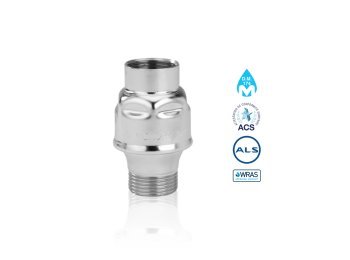
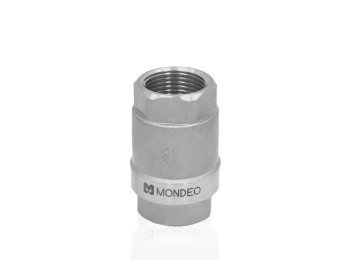
Check valves to prevent water backflow.
The check valve is strategic when water must flow in one direction only. It serves to protect pumps, lines and circuits from unwanted backflows. It is installed:
- in the presence of pumps and pressure tanks;
- on lines with tanks or accumulation systems;
- in systems with elevation differences;
- where backflows towards the upstream section must be avoided;
- in circuits where two lines may have different pressures.
For correct installation, it is essential to respect the arrow indicated on the valve body. The check valve must therefore be positioned along the pipe at the point where water backflow is to be prevented, with the arrow oriented in the normal direction of flow. For example, on a pump delivery line, the arrow must be oriented from the pump towards the system; on a line feeding a tank, it must be oriented towards the tank, if that is the correct filling direction.
Another important aspect is the installation position. Some check valves can work both horizontally and vertically, while others require a specific position to ensure correct closure.
What to do if the mains pressure is high or unstable.
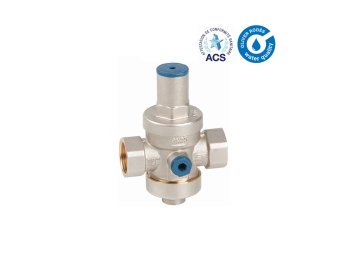
There are some telltale signs that the mains pressure is too high or inconsistent: overly strong jets from taps, hammering in pipes, hoses, taps or toilet cisterns that are frequently damaged, very different pressure between day and night. In these cases it is useful to install pressure reducers, setting the pressure according to the needs of your system and remembering to check it periodically. The benefits? The pressure reducer contributes to the sustainability of the hydraulic system because it avoids excessive pressures, reduces water waste, limits losses and protects components from unnecessary stress. In this way the system works under more stable conditions, with benefits in terms of efficiency, durability and maintenance.
Read the article Pressure reducers: a complete guide to selection, installation and maintenance in hydraulic systems.
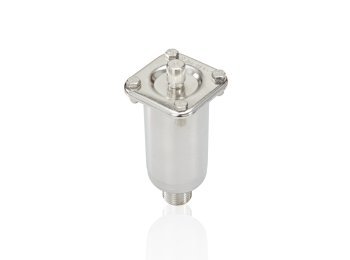
Air vent valves at points where air may accumulate.
Air vent valves serve to eliminate air accumulated in the system and help to regulate fluid circulation. Maintaining constant circulation means both improving thermal efficiency and reducing the need for subsequent maintenance interventions. In general, it is useful to install them as a preventive measure in heating circuits or at the highest points of the pipes; noises or radiators that only partially heat up are instead already clear signs that air is present in the circuit.
How to choose the right valve for a hydraulic system.
As we have seen, the choice of valve depends first and foremost on the function it must perform. In addition to this, the following must be considered:
· the pipe diameter;
· the working pressure;
· the fluid temperature;
· the materials, which must be compatible with the type of fluid and, where required, with use for drinking water;
· the type of connection;
· the installation position.
Furthermore, since valves cause localised pressure drops, the kv value or flow coefficient is also important. This parameter makes it possible to measure the impact of the valve on the system when fully open and therefore to assess energy efficiency.
FAQ - Hydraulic components
What are the main valves in a domestic plumbing system?
The main valves used in a domestic plumbing system are shut-off valves, check valves, pressure reducers, and air vent valves. Each performs a different function: stopping the flow, preventing water backflow, stabilizing pressure, and eliminating air from the pipes.
What is the difference between a shut-off valve and a check valve?
A shut-off valve is used to open or close the water passage. A check valve, on the other hand, allows fluid to flow in one direction only and prevents water from flowing back upstream.
Can a ball valve regulate flow rate?
A ball valve is primarily designed for shut-off purposes, meaning it works best when fully open or fully closed. It is not the most suitable solution for precisely regulating flow rate.
Where is a check valve installed?
A check valve is installed at points in the system where it is necessary to prevent water from flowing back upstream, for example on lines with pumps, pressure tanks, storage tanks, accumulators, or elevation differences. It must be installed respecting the flow direction indicated by the arrow on the valve body.
In which direction should a check valve be installed?
A check valve must be installed with the arrow pointing in the normal direction of water flow. On a pump delivery line, for example, the arrow should point from the pump toward the system. Installing it in the wrong direction compromises its function.
Where are air vent valves installed?
Air vent valves are installed at points where air can accumulate, particularly in heating circuits, at the high points of the pipework, and near radiators or manifolds.